
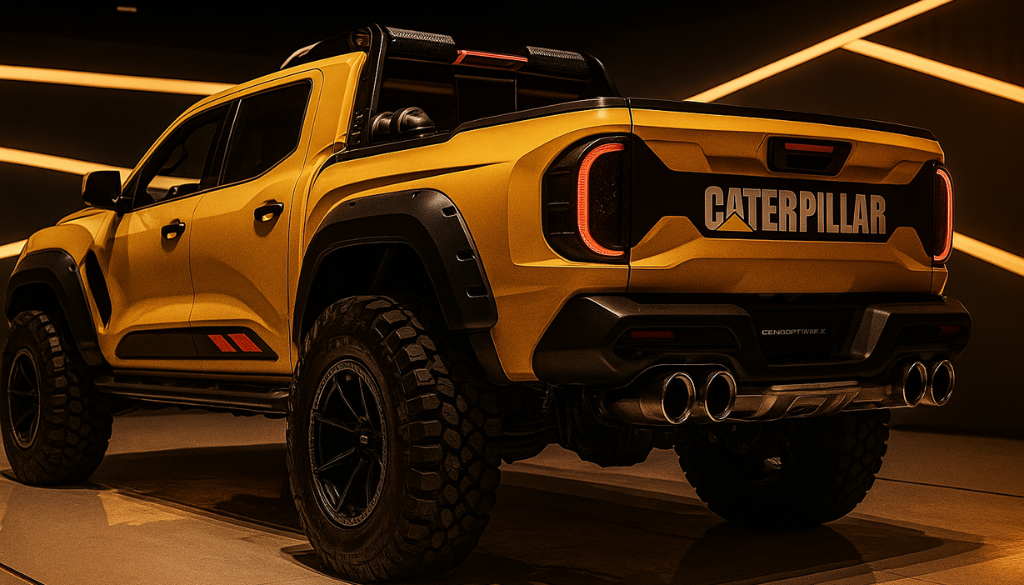
The Caterpillar Pickup Truck has sparked massive industry curiosity—especially among buyers seeking something tougher than the standard consumer pickup. As utility demands rise and worksites get more challenging, truck owners increasingly want machines that can haul more, endure harsh conditions, and deliver unmatched durability. Many now look beyond traditional brands and toward industrial-grade manufacturers like Caterpillar, known for legendary heavy-duty machinery.
This review delivers an in-depth, real-world evaluation of what the 2025 edition brings. You’ll discover where it excels, where it has limitations, and whether its rugged engineering justifies the premium often associated with a heavy-equipment brand. We’ll walk through performance, design, towing power, material choices, cabin features, longevity expectations, and overall value. Whether you’re a contractor, fleet manager, or automotive enthusiast, this comprehensive guide helps you decide if the 2025 Caterpillar Pickup Truck is worth the investment.
Performance and Powertrain Engineering
The engine philosophy—high torque, steady output, and dependability under heavy load—is the foundation of every machine manufactured by Caterpillar. This tradition is carried on by the Caterpillar Pickup Truck 2025.
Heavy-Duty Engine Architecture
Caterpillar integrates a scaled-down version of its industrial engine technology, optimizing torque curves for hauling rather than racing. Its low-end torque gives drivers consistent pull even on steep gradients, reducing the strain typically seen in conventional pickups.
Transmission and Torque Delivery
Control is the main focus of the multi-mode transmission system. Caterpillar concentrates on traction management, which helps when hauling large trailers or moving cargo over uneven terrain, rather than following speed measures.
Worksite-Ready Driving Feel
Drivers report a stable, anchored feel. The steering remains firm and predictable even when the truck is loaded close to its maximum payload—a key advantage for contractors transporting tools, aggregates, or machinery components.
Built Like Industrial Equipment
Chassis Reinforcement and Frame Strength
The pickup’s frame uses high-grade structural steel similar to Caterpillar’s construction vehicles. This gives the truck a boxy, sturdy visual profile but more importantly increases resistance to twisting forces—especially significant for rocky or uneven job sites.
Suspension System Inspired by Heavy Machinery
One standout feature is its adaptive suspension, modeled on CAT’s long-standing equipment engineering. The system calculates load weight and redistributes pressure to keep the truck level and stable.
Durable Exterior Materials and Coatings
Caterpillar applies an industrial corrosion-resistant coating on the underbody. This boosts longevity in regions with heavy moisture, salt exposure, or muddy conditions. It’s built with practicality in mind—scratches and dents are less noticeable due to matte-textured outer panels.
Interior Design: Functional but Surprisingly Comfortable
Cabin Layout and Utility Focus
At first glance, the interior mirrors a high-end work environment rather than a luxury vehicle. Controls are large and glove-friendly, and storage pockets are deep enough for tools, gloves, and safety gear.
Driver Comfort and Seating
Seats are designed for long workdays, with shock-absorbing foam and durable synthetic leather. Caterpillar’s emphasis on ergonomics prevents fatigue during rough operations.
Technology Integration
While not designed to be “futuristic,” the 2025 model includes:
• a heavy-duty infotainment screen
• integrated fleet management software
• engine diagnostic interface precision-tuned for contractors
• real-time load monitoring sensors
Towing and Payload: The Heart of the Machine
Unmatched Towing Capacity for its Class
The Caterpillar Pickup Truck outperforms traditional consumer-grade pickups in towing power. Its torque-heavy engineering supports steady pulls even at near-capacity limits.
Payload Calculations and Practical Use
For example, contractors hauling 2,000–3,000 kg of material find the Caterpillar Pickup Truck performs without the sagging rear-end common in lighter frames. The load monitoring system provides real-time feedback, preventing unsafe overloading.
Trailer Stability and Control
The truck includes an integrated trailer-control system, assisting with sway correction and brake distribution—especially useful for long hauls on hilly terrain.
Fuel Efficiency Versus Power: What You Should Expect
Industrial-Level Consumption
Given its heavy-duty build, fuel consumption aligns more closely with light commercial vehicles than consumer pickups.
Why Efficiency Isn’t the Priority
Caterpillar focuses on longevity and durability rather than breaking fuel-efficiency records. However, torque-optimized output means fewer full-throttle bursts, often balancing long-term consumption for work-focused users.
2025 Caterpillar Pickup Truck Price and Value Analysis
Understanding the 2025 Pricing Strategy
Buyers searching for the 2025 Caterpillar Pickup Truck price should expect a higher baseline than standard pickups. This is because the materials, engineering, and industrial-grade specifications make it more of a hybrid between a pickup and a light commercial machine.
Cost of Ownership Over Time
While upfront pricing may feel steep, ownership value increases when factoring in reduced repair frequency, long engine life, and durability under demanding conditions.
Resale Value and Market Perception
Caterpillar’s reputation for longevity significantly improves resale prospects. Buyers in construction-heavy regions often pay more for trucks associated with Caterpillar’s industrial credibility.
Where the Truck Excels and Where It Doesn’t
Strengths
• Exceptional durability under constant heavy use
• Strong towing and payload performance
• Smart worksite-focused technology
• Industrial-grade materials and coatings
• Reliability that mirrors CAT machinery standards
Limitations
• Higher purchase price
• Fuel efficiency below consumer-level pickups
• Bulkier build affects everyday maneuverability
• Limited aesthetic customization
Real-World Case Examples
Construction Site Reliability
A mid-sized contractor reported utilizing the vehicle on a daily basis for the transportation of steel beams. Over the course of nine months, there was no occurrence of frame sagging or suspension fatigue—an uncommon outcome for vehicles within that workload category.
Mining and Quarry Hauls
In mining environments, the truck’s traction control and reinforced frame outperformed lighter vehicles that often suffer under rocky conditions.
Long-Distance Material Supply Runs
Fleet managers noted stable temperature control in the powertrain even during 10+ hour hauls, indicating efficient cooling system engineering.
Maintenance Practicality and Longevity Expectation
Routine Maintenance Schedule
The 2025 model emphasizes modular parts, allowing mechanics to easily replace critical components without requiring proprietary service centers.
Industrial Durability Mindset
Its construction roots predict a long service life. Many expect 300,000+ km with proper maintenance, similar to mid-range commercial trucks.
Who Should Consider Buying the Caterpillar Pickup Truck?
Ideal Buyers
• Construction contractors
• Mining professionals
• Fleet managers
• Rural businesses with rough roads
• Utility workers needing dependable transport
Who May Not Need It
Urban drivers seeking comfort-focused, fuel-efficient commuting will find the truck excessive.
Buying Guidance: What to Check Before Purchase
Evaluate Your Workload Needs
Buyers should calculate typical towing and payload requirements to confirm the truck is the right fit.
Assess Local Maintenance Support
While Caterpillar parts are widely available, confirm nearby service facilities handle the pickup line.
Compare with Commercial Vehicle Alternatives
In some cases, a light commercial truck may fit your needs better if heavy towing isn’t a priority.
Conclusion
The Caterpillar Pickup Truck is changing the way heavy-duty utility vehicles work. It was made to work in situations where regular pickups don’t work, employing ideas from Caterpillar’s well-known equipment. With its unparalleled endurance, strong towing capacity, and reinforced frame built for harsh environments, the 2025 model further solidifies this reputation.
Its industrial-grade ambition is reflected in its pricing and fuel consumption, but companies that depend on high, continuous workloads frequently find the long-term value to be unmatched. The Caterpillar Pickup Truck is one of the most attractive choices in 2025 for professionals who value durability, dependability, and durability.
also visit –paul walker crash
FAQs
1. What makes the Caterpillar Pickup Truck different from regular pickups?
Its industrial-grade materials, reinforced frame, and heavy-equipment-inspired engineering set it apart from consumer pickups.
2. What is the 2025 Caterpillar Pickup Truck price?
Pricing is higher than standard pickups due to its commercial-grade build, but exact figures vary by region and configuration.
3. Is the Caterpillar Pickup Truck suitable for daily commuting?
It’s optimized for heavy workloads, not city driving, so commuters may find it bulkier and less fuel-efficient than typical pickups.
4. How long can the Caterpillar Pickup Truck last?
With proper maintenance, owners can reasonably expect longevity similar to light commercial trucks—often exceeding 300,000 km.5. Does the Caterpillar Pickup Truck have good resale value?
Yes. Caterpillar’s reputation for durability boosts long-term resale value, especially in construction-heavy regions.


