Overview
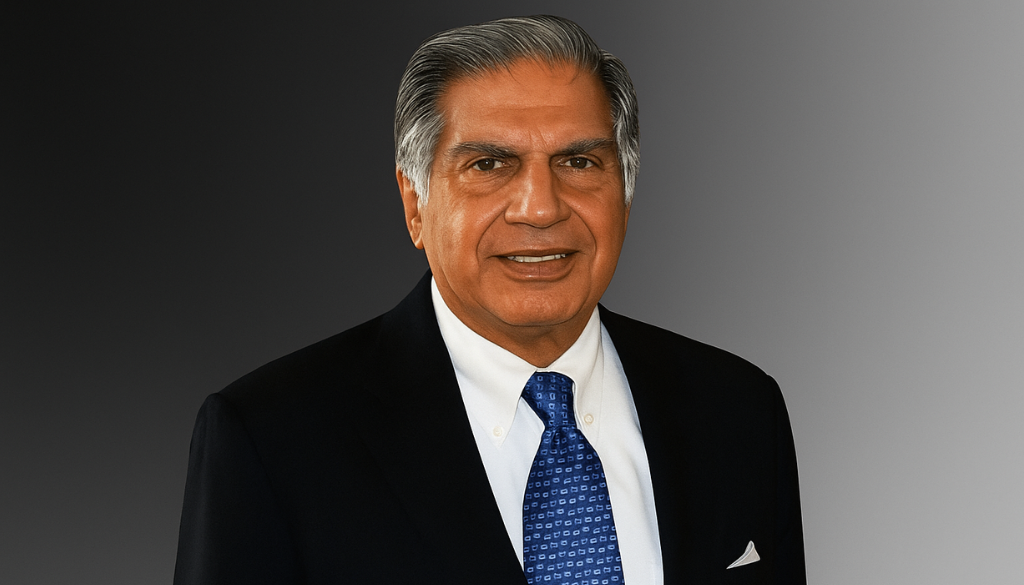
The biography of Ratan Tata is not only about a well-known businessman; it is also about a guy whose ideals, vision, and humility revolutionized the corporate scene in India. Ratan Tata has been a symbol of moral leadership, tenacity, and generosity for many years. His story inspires leaders, entrepreneurs, and dreamers alike. He has led the Tata Group to international prominence, acquired renowned businesses like Jaguar Land Rover, and donated billions to healthcare and education.
The early years, schooling, professional turning points, difficulties, triumphs, and long-term effects on business and society are all covered in this comprehensive biography of Ratan Tata. This page provides a thorough overview of his life and accomplishments, making it ideal for anybody studying leadership, starting a firm, or examining the legacy of Indian business titans.
Childhood and Family History
Born into the distinguished Tata family on December 28, 1937, in Bombay (now Mumbai), India, was Ratan Naval Tata. At the age of ten, his parents, Naval Tata and Sooni Tata, divorced. His perseverance and sense of independence were formed by this early encounter. He was brought up with strong family values based on discipline and humility by his grandmother, Lady Navajbai Tata.
He had a modest upbringing. He learned that having money is a duty rather than a luxury. Later on, this idea served as the cornerstone of his generosity and leadership.
Education: Establishing Robust Bases
Ratan Tata received a broad and international education:
- He went to Cathedral & John Connon School and Campion School in Mumbai.
- He later attended Shimla’s Bishop Cotton School.
- By graduating from Harvard Business School’s Advanced Management Program in 1975, he improved his managerial abilities even more.
His exposure to other countries broadened his outlook by fusing Indian ideals with contemporary business concepts.
Early Professional Experience: Lowly Beginnings at the Tata Group
Ratan Tata did not begin in a high-level role, in contrast to many business family successors. He started working on the Jamshedpur shop floor with Tata Steel in 1961, handling machines and shoveling limestone with other employees.
He learned the value of comprehending all facets of business operations and developed a profound regard for workers as a result of this practical experience. Ratan Tata made the decision to fully integrate himself with the culture of the workforce, in contrast to leaders who disengage from the reality on the ground.
Become a Leader
Ratan Tata succeeded J.R.D. Tata as Chairman of the Tata Group in 1991. Senior executives were initially skeptical of his employment, but he quickly demonstrated his abilities.
His bold actions included:
- Restructuring Tata Group enterprises for efficiency and focus.
- Fostering a culture of creativity and supporting emerging talent.
- Making targeted acquisitions in order to expand internationally.
His foresight enabled the Tata Group to grow from a business that was primarily focused on India to a major force in the world economy.
Key Accomplishments of Ratan Tata
International Acquisitions
Purchasing foreign brands that improved India’s reputation around the world is one of Ratan Tata’s most well-known accomplishments.
- Jaguar Land Rover (2008): One of Tata Motors’ greatest triumphs was a risky acquisition made amid the global financial crisis.
- Tetley Tea (2000): Tata Tea became the world’s second-largest tea company.
- Corus Steel (2007): Reinforced Tata Steel’s worldwide presence.
The Nano Project by Tata
The Tata Nano, Ratan Tata’s dream project, was designed to give Indian families access to the most affordable automobile in the world. Despite its commercial difficulties, it is nonetheless seen as a historic endeavor to democratize mobility.
Social Work & Philanthropy
Under his direction, the Tata Group made billions of dollars in donations to rural development, healthcare, and education. Among the noteworthy accomplishments are:
- The creation of research fellowships at Harvard and Cornell.
- Providing assistance to the Indian Institute of Science (IISc) and other establishments.
- Contributions to rural education, child nutrition, and cancer hospitals.
Leadership Attitudes and Principles
The following is a common description of Ratan Tata’s leadership style:
- Principled and ethical: He consistently put honesty ahead of financial gain.
- People-centric: He placed equal priority on communities, stakeholders, and employees.
- Visionary: Unlike many Indian business leaders, he anticipated the effects of globalization.
- Risk-taker: Despite obstacles, he didn’t hesitate to make audacious purchases.
Obstacles Encountered
Without difficulties, no biography can be considered complete. Ratan Tata had to overcome numerous obstacles:
- Peer skepticism when he became head of the Tata Group.
- The Tata Nano project not succeeding commercially despite noble intentions.
- Handling international problems, such as the 2008 financial crisis.
But he always recovered stronger thanks to his resilience.
Ratan Tata’s Wealth
Ratan Tata is one of the most well-known business magnates in India, but his personal wealth pales in comparison to those of billionaires around the world. Nearly 66% of the holding company is owned by charitable trusts, which receive the majority of Tata Sons’ income.
Although his estimated net worth is around $1 billion, his true legacy is one of giving rather than wealth creation.
The Legacy of Ratan Tata
Despite his retirement in 2012, Ratan Tata remains an inspiration as Tata Sons’ Chairman Emeritus. His contributions include:
- Establishing the Tata Group as a household name.
- Promoting charity in Indian business culture.
- Mentoring young business owners and startups.
- Gaining affection and admiration for his generosity and modesty.
He continues to be a live example of how moral principles and commercial success may coexist.
Important Takeaways from Ratan Tata’s Life
- Hearts are won by humility: Despite his size, he is personable and grounded.
- Take calculated chances: His buys demonstrated both planning and bravery.
- Contribute to society: Improving lives is the true measure of achievement.
- Lead with morals: Honesty builds a solid reputation.
- Adapt to change: He made sure the Tata Group evolved over time, from steel to software.
In Conclusion
The biography of Ratan Tata serves as a guide for moral leadership, resiliency, and humanitarian service in addition to being a history of a businessman. His transformation from a bashful young man brought up by his grandmother to one of the most admired leaders globally demonstrates that true greatness stems from morals rather than just material prosperity.
His life narrative provides timeless lessons in bravery, vision, and compassion for leaders, entrepreneurs, and students alike.
FAQs
1. What is a synopsis of Ratan Tata’s life story?
The biography of Ratan Tata emphasizes his early years, Cornell education, leadership of the Tata Group, international acquisitions such as Jaguar Land Rover, and charitable work.
2. What are Ratan Tata’s most notable accomplishments?
His accomplishments include founding the Tata Nano, acquiring global brands, and making significant contributions to charitable causes.
3. How much money is Ratan Tata worth?
Although the majority of Tata Sons’ fortune is kept in charity trusts, Ratan Tata’s personal net worth is estimated at about $1 billion.
4. What type of leadership does Ratan Tata possess?
He is renowned for his moral, people-centered leadership that strikes a balance between social responsibility and financial gain.
5. What charitable contributions did Ratan Tata make?
Through billions of donations from Tata Trusts, he supported scientific research, education, healthcare, and rural development.
6. What can business owners take away from the life of Ratan Tata?
Entrepreneurs can gain knowledge about ethical leadership, risk-taking with a plan, humility, and the value of contributing to society.
7. Why does India hold Ratan Tata in such high regard?
Ratan Tata is respected as a humanitarian as well as a businessman due to his vision, generosity, and humility.